


Acceptance and Commitment
Therapy (ACT)
What is ACT
Acceptance and Commitment Therapy (ACT) is an evidence-based therapy that focuses on helping people develop a different relationship with difficult thoughts, emotions, and internal experiences. Rather than trying to eliminate distress altogether, ACT aims to build psychological flexibility, which is the ability to respond to challenges in ways that are guided by personal values and what matters most.
ACT combines mindfulness, self-awareness, and values-based action to help people reconnect with meaningful areas of life, even during difficult periods. It is not about “thinking positively,” suppressing emotions, or simply accepting suffering. Instead, ACT focuses on learning how to make space for difficult experiences without becoming stuck in avoidance, self-criticism, or unhelpful patterns that move people away from the life they want to build.

ACT can support a wide range of difficulties, including anxiety, OCD, low mood, stress, burnout, emotional overwhelm, and challenges related to neurodiversity. It can be used as a standalone approach or integrated with other evidence-based therapies such as CBT and ERP, depending on individual needs and goals.
How Can ACT Help?
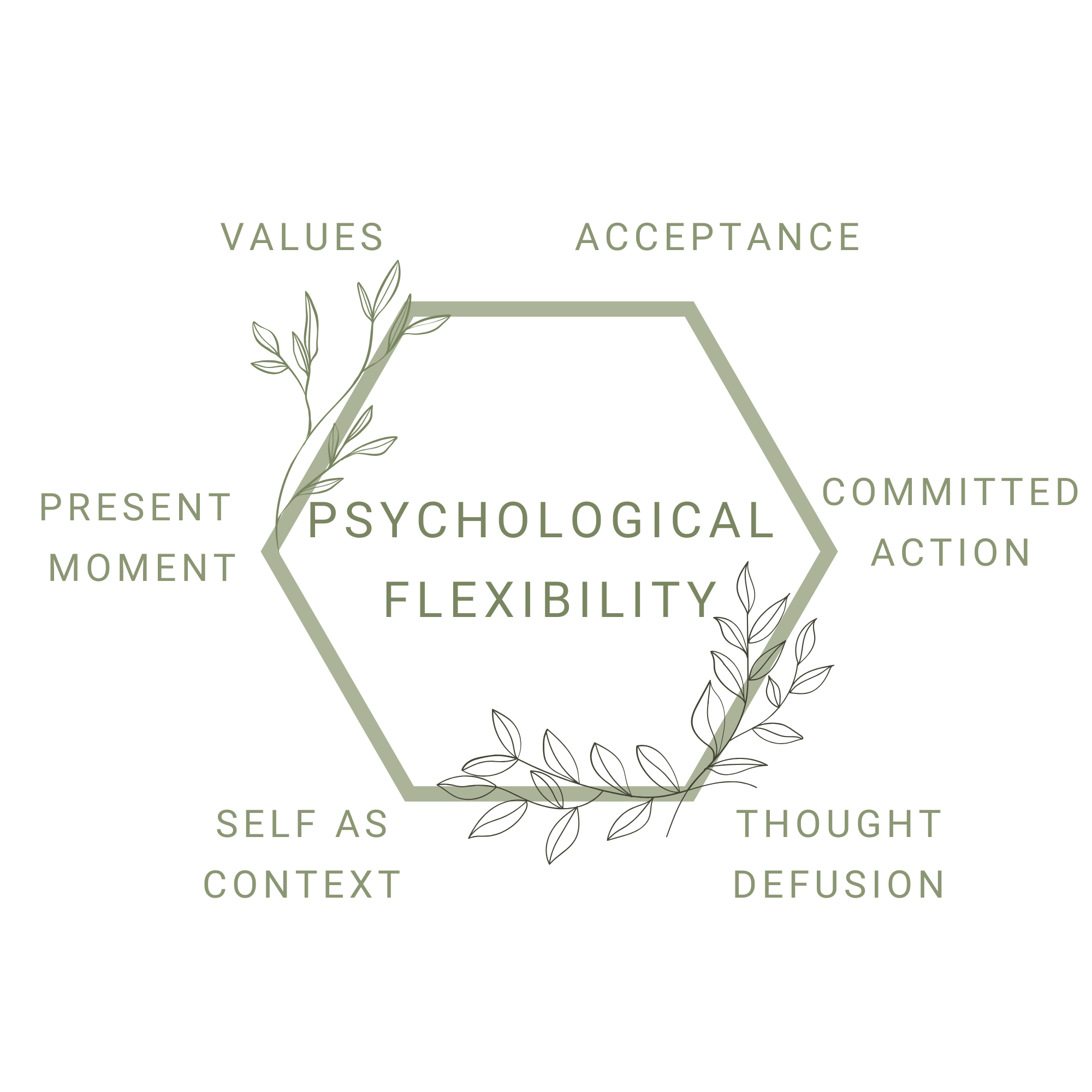
ACT is guided by a model known as the “hexaflex,” which describes six core processes that work together to support psychological flexibility. Psychological flexibility refers to the ability to respond to difficult thoughts, emotions, and life experiences in ways that are more open, balanced, and guided by personal values, rather than avoidance or automatic reactions.
The hexaflex is not a set of rigid steps, but a flexible framework used to help people develop greater awareness, self-understanding, and meaningful action. Each process is interconnected, and different areas may become more relevant at different times depending on a person’s experiences, goals, and current challenges.
The Key ACT Concepts

Acceptance
Acceptance involves making space for difficult thoughts, emotions, and internal experiences rather than constantly struggling against them or trying to avoid them.

Thought Defusion
Thought defusion involves learning to step back from thoughts and see them as mental experiences, rather than facts that must be obeyed or believed.

Values

Values are the personal qualities and directions that matter most to a person, such as connection, growth, honesty, creativity, or compassion.
Committed Action

Committed action involves taking meaningful steps guided by personal values, even when difficult thoughts or emotions are present.
Self-as-Context
Self-as-context refers to developing a broader perspective of oneself, helping to recognize that thoughts, emotions, and experiences do not define who you are.

Present Moment
This focuses on bringing attention to the present moment with openness and awareness, rather than becoming caught up in worries about the past or future.
How is ACT Used in Therapy?
In therapy, ACT is used in a practical, collaborative, and flexible way to help people better understand the patterns that may be contributing to distress or keeping them stuck. Sessions often involve exploring how difficult thoughts, emotions, or internal experiences influence behaviour, relationships, and daily life. Therapy may include mindfulness and grounding exercises, noticing and stepping back from unhelpful thinking patterns, exploring avoidance or self-critical cycles, and identifying personal values that can guide meaningful action.
ACT also focuses on developing practical strategies and taking small, manageable steps towards the things that matter most, even when discomfort or uncertainty is present. The six ACT processes, often represented through the hexaflex, are interconnected and do not need to be explored in a fixed order. Depending on what feels most relevant, therapy may focus more on areas such as acceptance, values, present-moment awareness, or committed action at different stages of the process.