


Cognitive Behavioural
Therapy (CBT)
Cognitive Behavioural Therapy (CBT) is an evidence-based psychological therapy that focuses on the relationship between thoughts, feelings, and behaviours, and how these interact to influence emotional well being. It is based on the understanding that psychological difficulties are often maintained by unhelpful or unbalanced patterns in thinking and behaviour, rather than being caused by a single factor. By identifying and working with these patterns, CBT aims to support meaningful and practical change in daily life.
CBT is a structured and goal-oriented approach, meaning therapy often focuses on specific difficulties that a person would like to understand or change. It is widely used across a range of presenting issues and has a strong evidence base for conditions such as anxiety, depression, OCD, panic, phobias, and stress-related difficulties. The focus is on developing skills that help people respond to challenges in more flexible and effective ways over time.
What is CBT
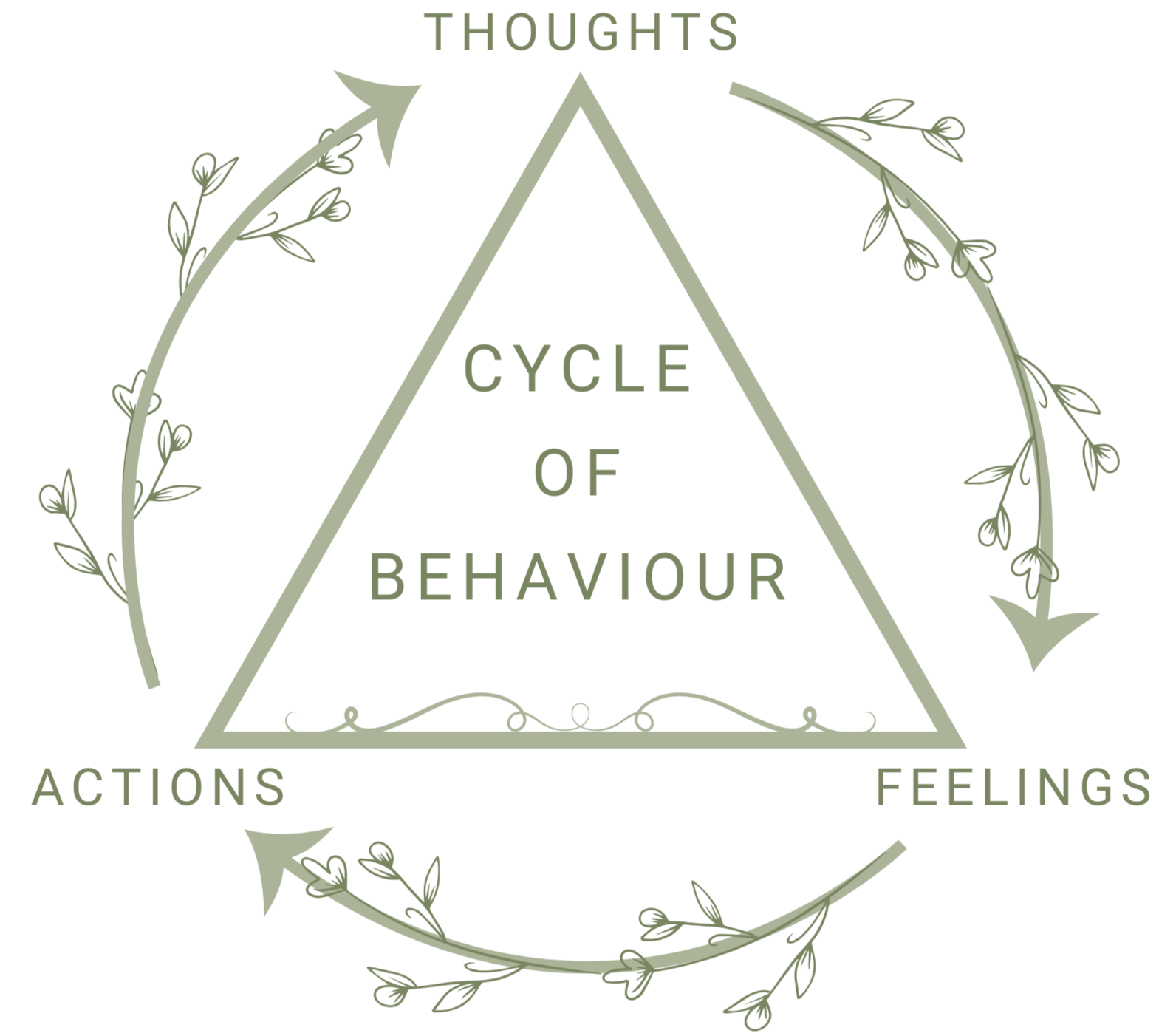
A key model in CBT is the cognitive triangle, which describes how thoughts, emotions, and behaviours are interconnected. It highlights how the way we think about situations can influence how we feel emotionally, which then affects how we behave. These patterns can become self-reinforcing cycles, where unhelpful thoughts lead to distressing emotions and behaviours that unintentionally maintain the original problem. CBT works by helping to identify and shift these cycles in a more balanced direction.
CBT works by helping people become more aware of their thoughts, emotions, and behaviours, and understanding how these influence one another. Therapy often involves identifying automatic thoughts, exploring more balanced or helpful perspectives, and experimenting with changes in behaviour to see how this affects mood and functioning. Over time, this helps build greater awareness, emotional regulation, and more flexible ways of responding to difficult situations.
How Does CBT Work?
CBT's Cognitive Triangle

What Can CBT Treat?
CBT is a highly adaptable approach that can support a wide range of difficulties, including anxiety, depression, OCD, panic, phobias, stress, and low self-esteem. It also provides the foundation for many specialized approaches, such as Exposure and Response Prevention (ERP) for OCD and Behavioural Activation for depression. These approaches build on the CBT model by focusing more specifically on patterns such as avoidance, compulsions, or withdrawal that can maintain distress over time.
What Does CBT Look Like In-Session?
In traditional settings, CBT can sometimes feel quite structured, with worksheets, exercises, and a clear focus on between-session tasks. While these tools can be helpful, CBT in practice does not need to feel rigid or formulaic. In therapy, it is adapted flexibly so that it fits the individual and what feels most relevant in the moment.
Sessions may include CBT-informed discussion, exploring current difficulties, noticing patterns between thoughts, feelings, and behaviours, and introducing practical strategies where helpful. Structured tools or exercises may be used, but they are introduced collaboratively and at a pace that feels manageable. Homework, when used, is agreed together and adapted to feel realistic and supportive, with the overall focus on applying CBT principles in a way that feels natural and tailored to the person.