


Exposure and Response
Anxiety Prevention (ERP)
What is ERP
Exposure and Response Prevention (ERP) is a structured, evidence-based therapy most commonly used within Cognitive Behavioural Therapy (CBT). It helps people change how they respond to intrusive thoughts, fears, and anxiety by reducing avoidance and unhelpful coping strategies such as compulsions, reassurance-seeking, or other safety behaviours. The aim is not to remove anxiety or intrusive thoughts, but to help reduce their impact and the ways they can take over daily life.
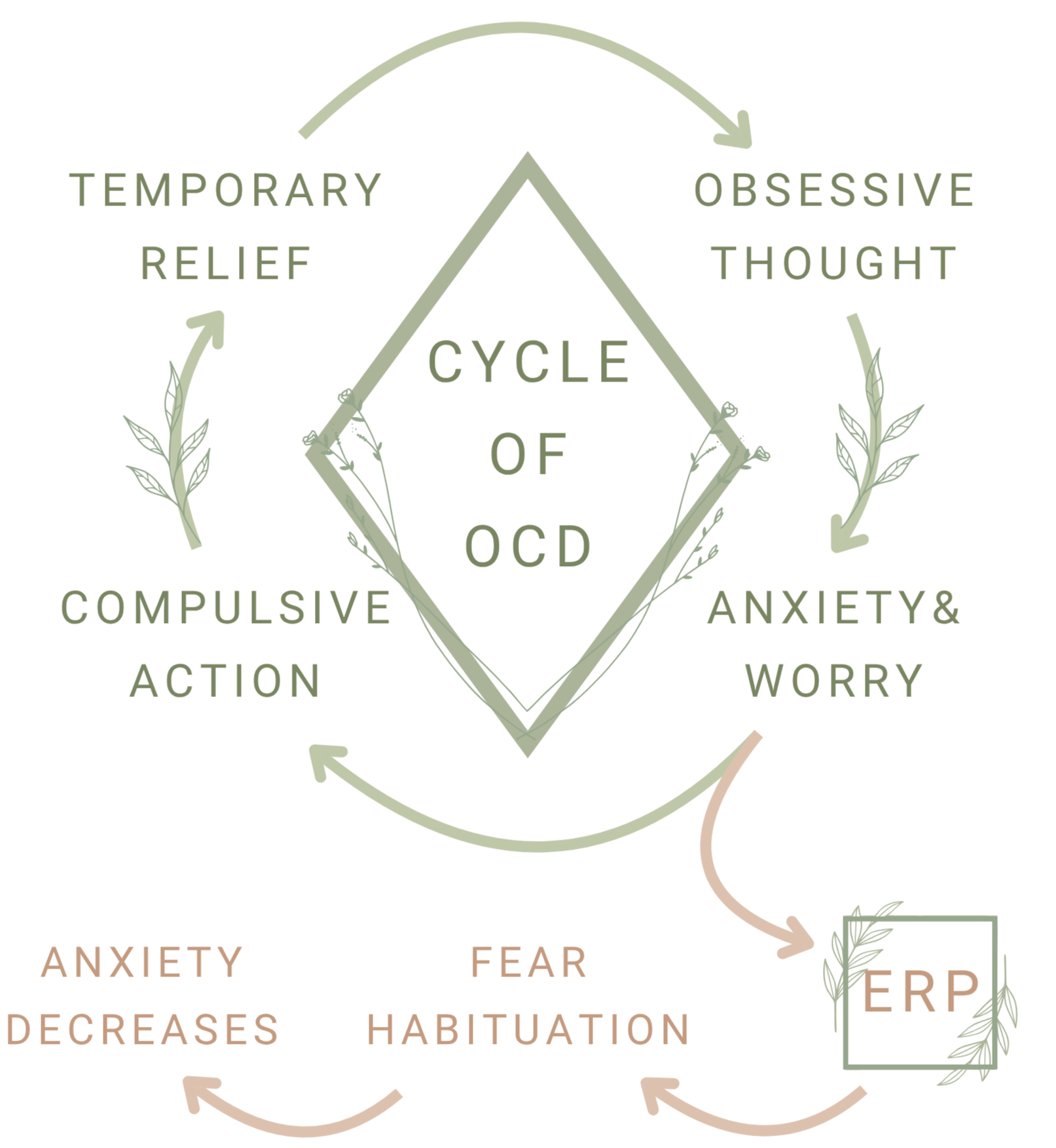
ERP is based on the understanding that anxiety is often maintained when feared situations are avoided or when short-term coping behaviours are used to feel safe. While these strategies can bring immediate relief, they can unintentionally strengthen anxiety over time. ERP works by gently breaking this cycle, helping people learn that anxiety can be tolerated and naturally reduces without needing to be neutralized or controlled.
How Does ERP Work?
ERP works by gradually and intentionally facing thoughts, images, or situations that trigger anxiety (exposure), while practicing not engaging in the usual responses that maintain the cycle of fear (response prevention). This process is planned collaboratively and introduced at a manageable pace, often starting with less distressing situations and building over time.
As exposure is repeated without relying on compulsions or avoidance, people begin to experience that anxiety rises and falls on its own. This helps reduce the urgency of intrusive thoughts and weakens the belief that something must be done to prevent harm or discomfort.

What Can ERP Treat?
ERP is most commonly used for Obsessive-Compulsive Disorder (OCD), including contamination fears, checking behaviours, intrusive harm-related thoughts, religious or moral obsessions, and symmetry or ordering compulsions. It can also be helpful for specific phobias, such as fears of being sick, animals, injections, or enclosed spaces, as well as other anxiety difficulties where avoidance plays a key role, including health anxiety and panic-related avoidance.
What Does ERP Look Like In-Session?
In session, ERP involves both understanding your difficulties and actively working with them in a structured and supportive way. We will begin by taking a detailed history of the issues you are experiencing, including how they affect your daily life and what patterns or experiences may have contributed to them. This helps us build a shared understanding and identify the most relevant areas to focus on.
From there, we will develop a gradual exposure hierarchy together, starting with situations that feel manageable and building up over time. ERP involves exposures followed by response prevention, meaning you will gently face feared thoughts, situations, or triggers while practicing not engaging in compulsions or safety behaviours. These steps are always done collaboratively and at a pace that feels supported, with practice taking place in-session so you are guided through the process as you build confidence in managing anxiety differently.