

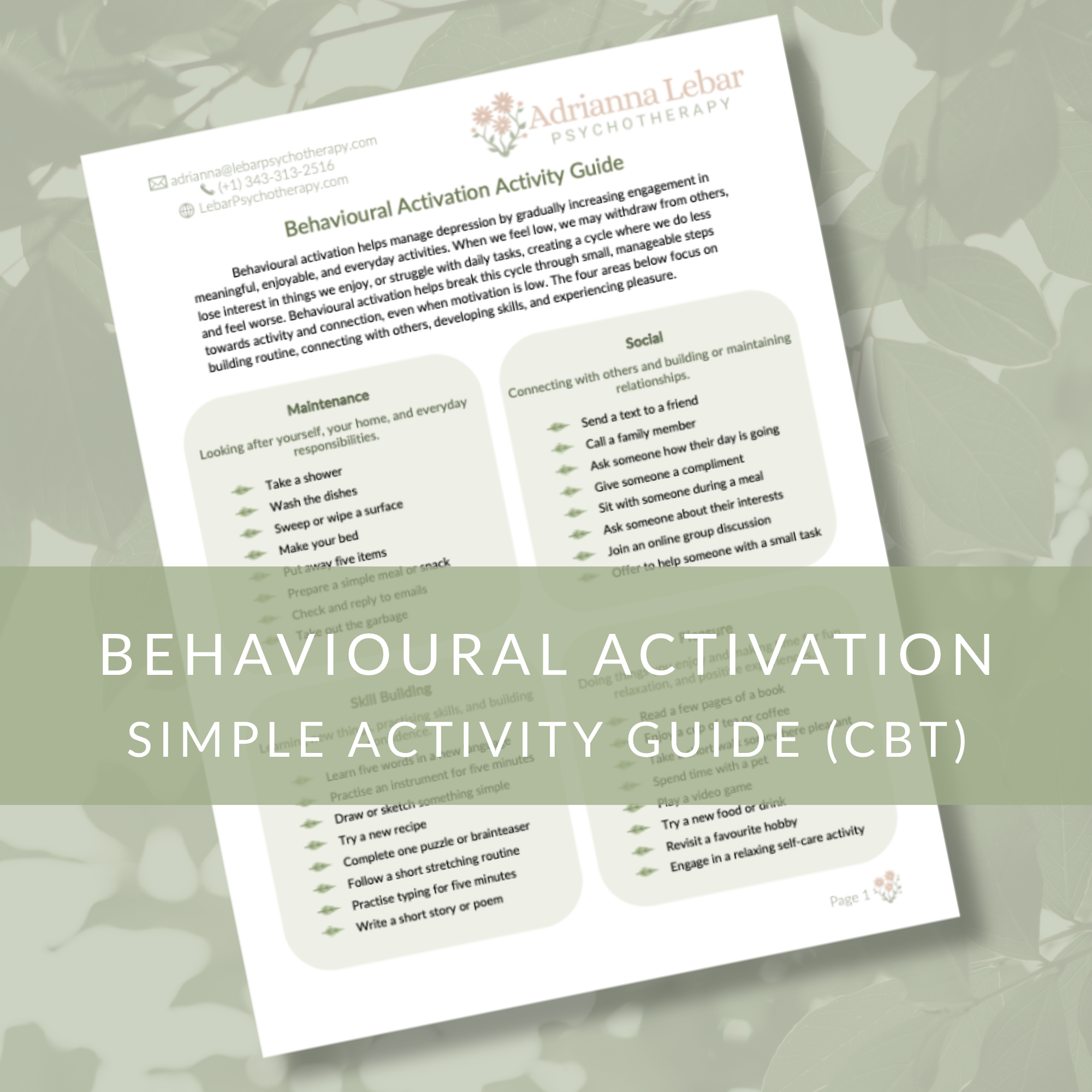
A practical resource offering simple, manageable activities to help improve mood, build routine, and increase engagement through behavioural activation.
Behavioural activation is a therapeutic approach used in Cognitive Behavioural Therapy (CBT) that explores the relationship between everyday activities and emotional well-being. During periods of depression or low mood, changes in motivation, energy, and daily routines can make it harder to stay engaged in different areas of life.
The Behavioural Activation Activity Guide is a practical resource designed to help identify manageable activities across different areas of daily life and explore ways to gradually increase engagement in activities that support their well being.
Understanding the Cycle of Low Mood
When depression affects energy and motivation, everyday tasks and social interactions can feel overwhelming. It can become easier to put things off or withdraw from activities, leaving fewer opportunities for connection, enjoyment, and a sense of accomplishment. Over time, this pattern can contribute to ongoing low mood.
Behavioural activation helps shift this pattern by encouraging small, manageable steps towards activities that matter to the individual. Motivation and enjoyment may develop gradually as activity becomes part of a regular routine. Starting with realistic goals can make it easier to build consistency, work around common barriers, and discover which activities feel meaningful or rewarding. Over time, these experiences can help inform daily routines and support greater engagement in everyday life.
Finding Activities That Feel Meaningful
Behavioural activation focuses on engaging in meaningful activities that provide opportunities for enjoyment, achievement, connection, and a sense of purpose.
Activities may not always feel rewarding in the moment, particularly when mood and motivation are low. You might not feel like going for a walk or contacting a friend, but afterwards you may notice a sense of accomplishment or improved mood. Low mood can make it harder to anticipate enjoyment, meaning that positive feelings often follow activity rather than motivate it.
Try to choose activities that interest you and fit realistically into your everyday life, rather than focusing on what you think you should be doing.
Using the Activity Guide
The Behavioural Activation Activity Guide offers a range of simple ideas across different areas of everyday life. Use it to find inspiration, identify activities that interest you, and consider which ones might fit into your current routine.
Choose one or two activities that feel achievable and adapt them to suit your circumstances. You can gradually work towards more challenging activities by breaking them down into smaller, manageable steps.
Educational Use and Scope
This resource is intended as a psychoeducational tool to support understanding and practical application of behavioural activation. It is intended to be used alongside therapy, where activities can be explored in relation to an individual's circumstances, needs, and treatment goals.
Further Reading and Resources
The following research explores the evidence for Behavioural Activation (BA), including its effectiveness in treating depression and the role of meaningful activities and positive reinforcement in supporting emotional well-being. These resources provide further insight into the therapeutic principles underlying this activity guide.
Cuijpers, P., Ciharova, M., Tong, L., Liu, Y., Sprenger, A. A., Miguel, C., Karyotaki, E., & Harrer, M. (2026). Behavioral activation for depression: A comprehensive systematic review and meta-analysis. Clinical Psychology Review, 128, Article 102783. https://doi.org/10.1016/j.cpr.2026.102783
Potsch, L., & Rief, W. (2024). Effectiveness of behavioral activation and mindfulness in increasing reward sensitivity and reducing depressive symptoms - A randomized controlled trial. Behaviour Research and Therapy, 173, Article 104455. https://doi.org/10.1016/j.brat.2023.104455
Cuijpers, P., Karyotaki, E., Harrer, M., & Stikkelbroek, Y. (2023). Individual behavioral activation in the treatment of depression: A meta analysis. Psychotherapy Research, 33(7), 886–897. https://doi.org/10.1080/10503307.2023.2197630