

Building an Activity Menu: Supporting Daily Functioning and Motivation
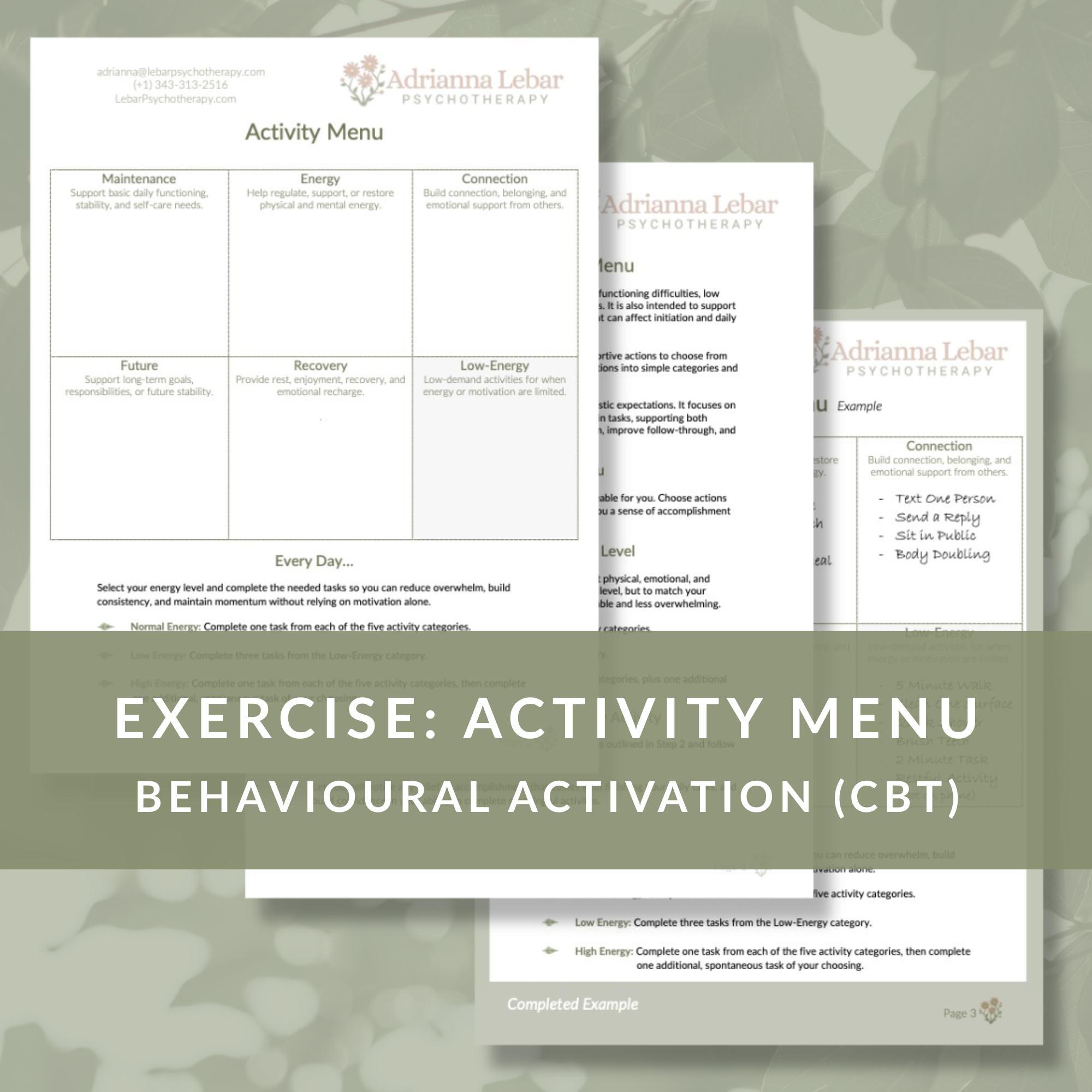
A printable resource for supporting task initiation, reducing overwhelm, and creating a personalized activity menu for daily functioning.r.
Executive functioning affects skills such as planning, prioritizing, organizing, and getting started. When these skills are under strain, even deciding which task deserves attention can feel overwhelming. A long to-do list, multiple competing priorities, or uncertainty about where to begin can leave people feeling stuck before any action has been taken. This experience is common for people living with ADHD, autism, depression, and other conditions that affect initiation, motivation, or daily functioning.
Activity menus are a practical strategy for organizing options and identifying meaningful actions to complete throughout the day. This worksheet provides a structured process for creating, organizing, and using a personalized activity menu based on your needs, values, and available energy. Having a collection of supportive options available can reduce decision fatigue and make it easier to identify a clear next step.
Why an Activity Menu Can Help
Energy, motivation, and attention naturally change from day to day. Factors such as sleep, stress, physical health, emotions, and competing demands can all influence the resources available to complete tasks. Matching activities to your current capacity can make it easier to get started, reduce feelings of overwhelm, and support sustainable routines over time.
Completing small, meaningful activities also helps build momentum. Each completed task provides an opportunity to experience a sense of accomplishment and fulfilment. These experiences can strengthen confidence, reinforce the belief that tasks are possible, and make it easier to approach future activities.
Creating a Menu That Fits Your Life
The most helpful activity menu reflects your own needs, values, and routines. Including activities across different areas of life helps maintain regular engagement in the people, responsibilities, and experiences that are meaningful to you. Supporting a range of life areas can improve overall wellbeing and reduce the tendency for one area to be neglected during periods of stress or low motivation. Choosing activities that feel realistic and achievable increases the likelihood that they will be used consistently and become part of your routine.
Motivation and Getting Started
Many people experience difficulty getting started on tasks, even when they are important or meaningful. Beginning an activity often involves several steps, such as deciding what to do, where to start, and how much effort the task may require. An activity menu helps reduce these barriers by providing realistic options that are already identified. Having a clear next step can make tasks feel more approachable, support follow-through, and strengthen confidence by providing opportunities to experience completion and success.
Educational Use and Scope
This worksheet is intended as a general educational resource and a support alongside therapy.
Further Reading and Resources
The following resources provide further reading on executive functioning difficulties, task initiation, behavioural activation, and strategies for supporting daily functioning. They highlight research and clinical literature related to using structured, meaningful activities and external supports to improve engagement and follow-through.
Tindall, L., Kerrigan, P., Li, J., Hayward, E., & Gega, L. (2024). Is behavioural activation an effective treatment for depression in children and adolescents? An updated systematic review and meta-analysis. European Child & Adolescent Psychiatry, 33(12), 4133–4156. https://doi.org/10.1007/s00787-024-02429-3
Becker, P., Rask, M., Safipour, J., & Gunnarsson, A. B. (2023). Selfcare Strategies Shown to Be Useful in Daily Life for Adults Diagnosed with Attention Deficit Hyperactivity Disorder - A Systematic Review. Issues in mental health nursing, 44(9), 825–833. https://doi.org/10.1080/01612840.2023.2234477
Diamond, A. (2013). Executive Functions. Annual Review of Psychology, 64(1), 135–168. https://doi.org/10.1146/annurev-psych-113011-143750