


Therapy Tools & Resources
Therapy Interventions, Psychoeducation & Practical Worksheets
This blog brings together a selection of clinical interventions, worksheets, and psychoeducation resources used in therapy practice, shared in a practical and accessible way.
The worksheets have been developed by combining, adapting, and drawing from well-established, evidence-based therapeutic approaches, with the aim of making them natural to introduce in therapy and more supportive for neurodiverse clients. Designed for therapists and clients alike, this space offers tools to support mental health, personal growth, and therapeutic practice across a range of approaches and needs.
Our resources draw primarily from Acceptance and Commitment Therapy (ACT), Cognitive Behavioural Therapy (CBT), and Exposure and Response Prevention (ERP), alongside integrative approaches such as mindfulness-based and humanistic therapy. They are especially relevant for working with OCD, anxiety, depression, and neurodiversity, and are designed to be flexible and adaptable so they can be tailored to individual needs, communication styles, and therapeutic goals.
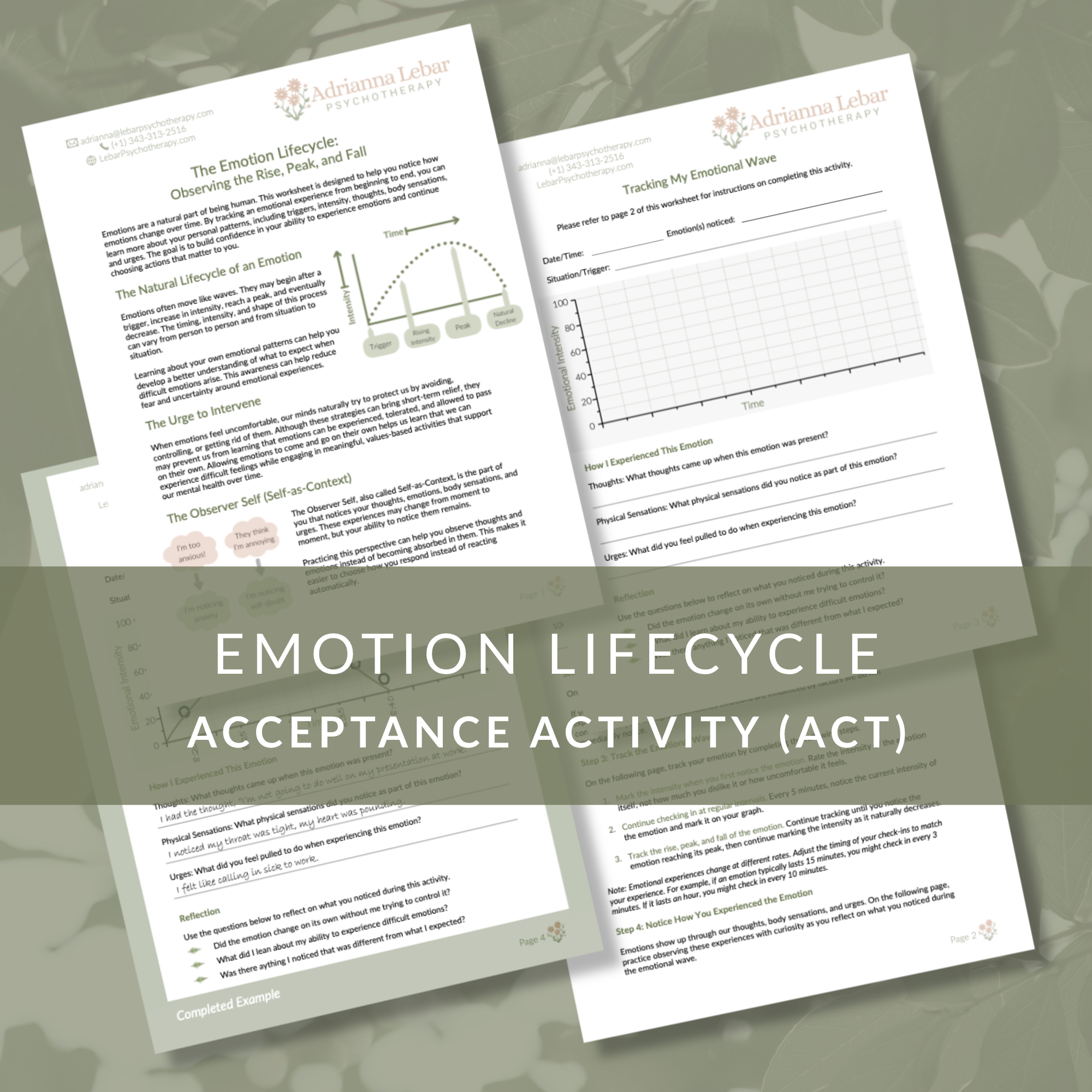
The Emotion Lifecycle: An Acceptance-Based Self-as-Context Exercise
The Emotion Lifecycle worksheet provides a structured way to observe emotions as they change over time, while noticing the thoughts, sensations, and urges that accompany them. It introduces an acceptance-based approach to staying with these experiences without immediately acting on or trying to change them, while practicing self-as-context by observing them from a broader perspective. Repeated practice can support you in recognizing patterns, becoming more familiar with emotional experiences, and building greater tolerance without relying on avoidance behaviours. make this shorter
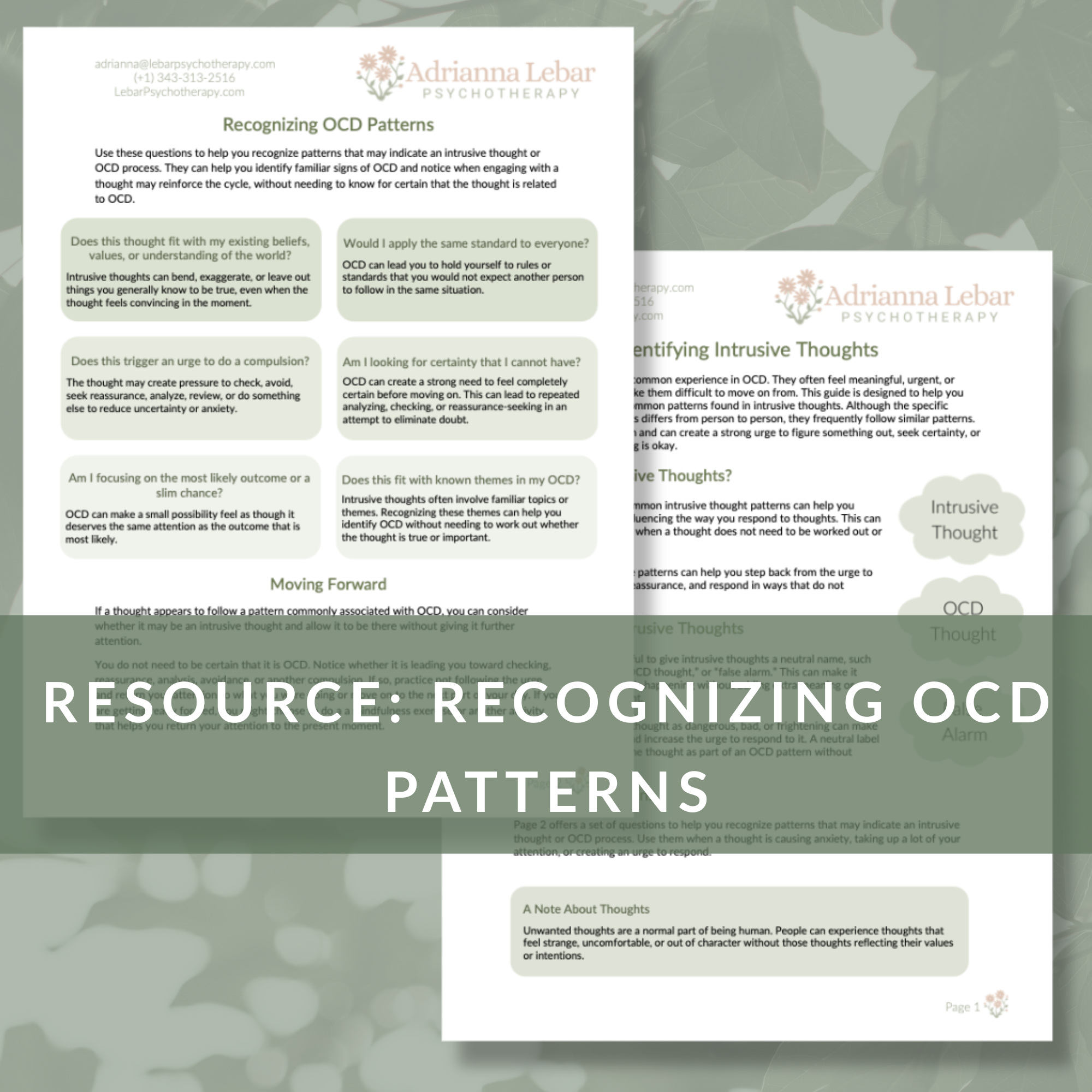
Identifying Intrusive Thoughts: Understanding Patterns of OCD and Anxiety
Recognizing an intrusive thought in the moment can create an opportunity to pause and notice the urge to respond before automatically engaging in a compulsion. This resource explores how to recognize intrusive thoughts as part of an OCD pattern, rather than as problems that need to be solved. By doing so, you can begin to practice tolerating uncertainty and responding differently to thoughts, even when there is an urge to act on them.
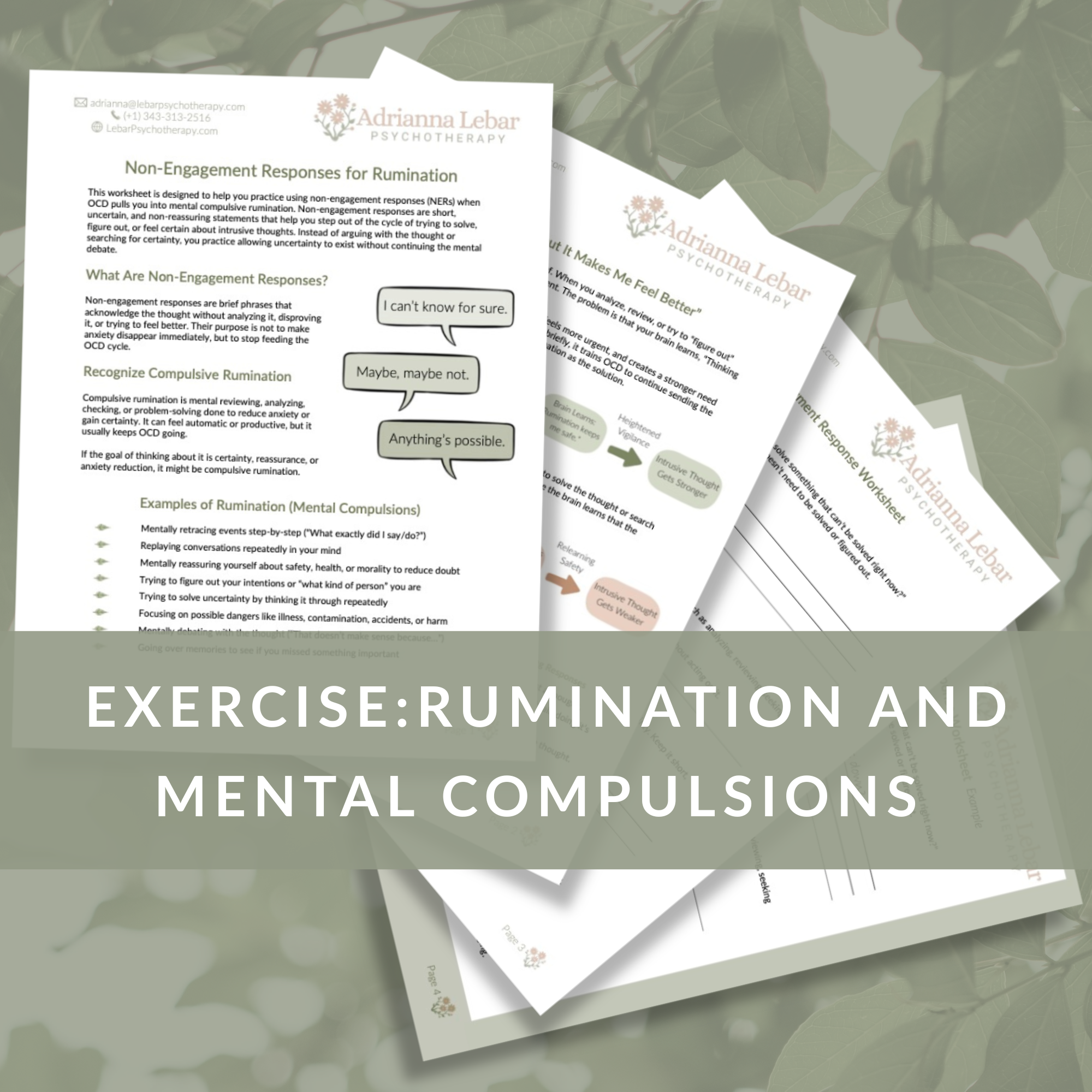
Non-Engagement Responses for Rumination (Mental Compulsions in OCD)
This worksheet is designed for OCD rumination and mental compulsions, especially when overthinking, reviewing, or reassurance seeking becomes repetitive. It introduces non-engagement responses (NERs) as a practical tool to help notice when rumination is happening and practice stepping out of the mental loop. The focus is on changing the response to intrusive thoughts rather than trying to eliminate them.
Used within an ERP-informed approach, it supports greater awareness of mental compulsions and helps reduce engagement with repetitive analysis over time.
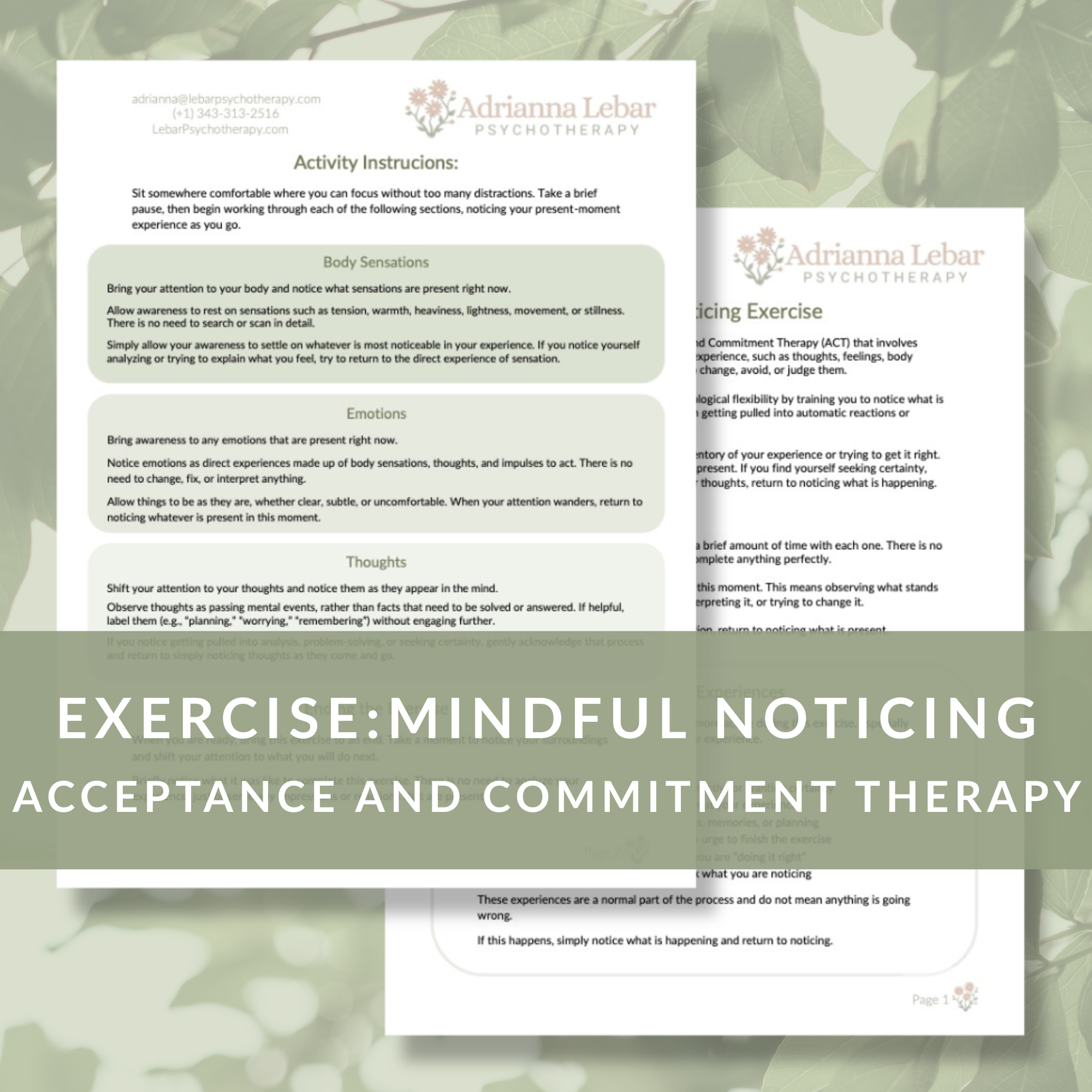
Mindful Noticing: A Simple ACT Exercise for Building Awareness
This worksheet introduces mindful noticing as a structured exercise for developing present-moment awareness. It supports the practice of observing thoughts, emotions, body sensations, and environmental cues as they arise, without engaging in analysis, judgment, or attempts to control experience. The focus is on returning attention to the present moment whenever the mind wanders into automatic thinking or distraction. This exercise is often used in work with anxiety, overthinking, and difficulty disengaging from repetitive thought patterns.